Blueprint
Technology creates possibility. Human understanding makes progress possible.
Across music, education, filmmaking, and product design, I've observed a consistent pattern: introducing something new doesn't guarantee people will embrace it.
Meaningful change requires more than access or capability. People need to understand what has changed, recognize its relevance, and feel equipped to act.
The Human Adaptation Blueprint grew from that understanding—a framework for bridging the distance between technological possibility and human progress.
Human adapatation determines what becomes valuable.
Understanding
People recognize what changed.
Alignment
Team connect priorities and meaning.
Action
The next step becomes clear.
Adaptation
The experience evolves with people.
Why Now
Technology is advancing faster than our ability to adapt to it.
AI makes that gap increasingly visible. New capabilities emerge almost overnight, while the skills, behaviors, and shared understanding needed to use them take much longer to develop.
The challenge isn't simply adopting new technology. It's helping people understand what has changed, recognize its relevance, and adapt how they think and work.
Organizations that close this gap can turn technological capability into meaningful value. Those that don't may have access to the same tools without realizing the same benefits.
The Operating System
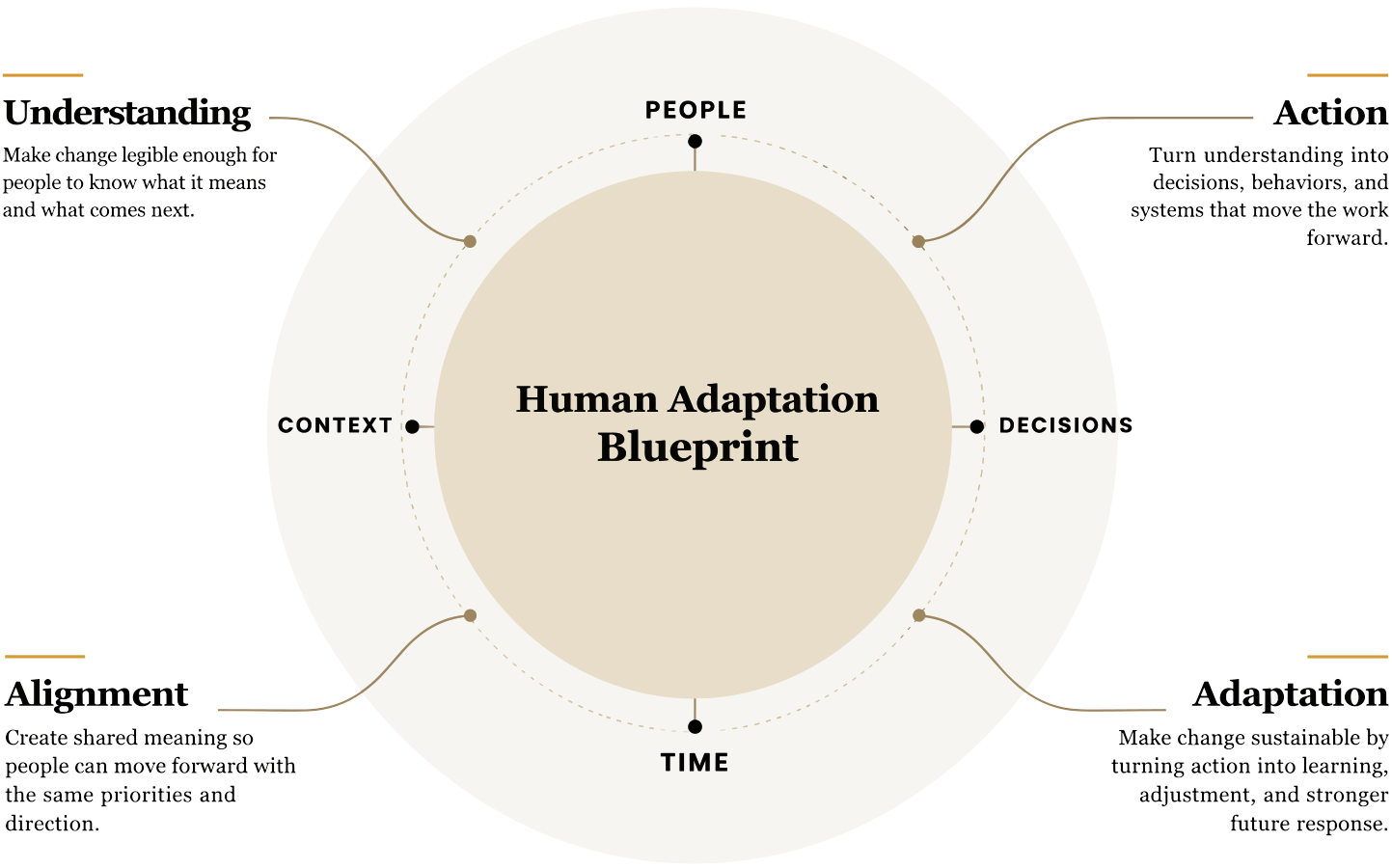
The Human Adaptation Blueprint connects four capabilities: Understanding, Alignment, Action, and Adaptation.
Each builds on the others—helping people interpret change, establish shared direction, take meaningful action, and learn from what follows.
The process is iterative. What we learn through adaptation informs what we need to understand next.
THE FRAMEWORK
Human Adaptation Blueprint
PEOPLE · CONTEXT · DECISIONS · TIME
Understanding
Make change legible enough for people to know what it means and what comes next.
Alignment
Create shared meaning so people can move forward with the same priorities and direction.
Action
Turn understanding into decisions, behaviors, and systems that move the work forward.
Adaptation
Make change sustainable by turning action into learning, adjustment, and stronger future response.

Adaptation informs the next cycle of understanding.
Adaptation informs the next cycle of understanding.
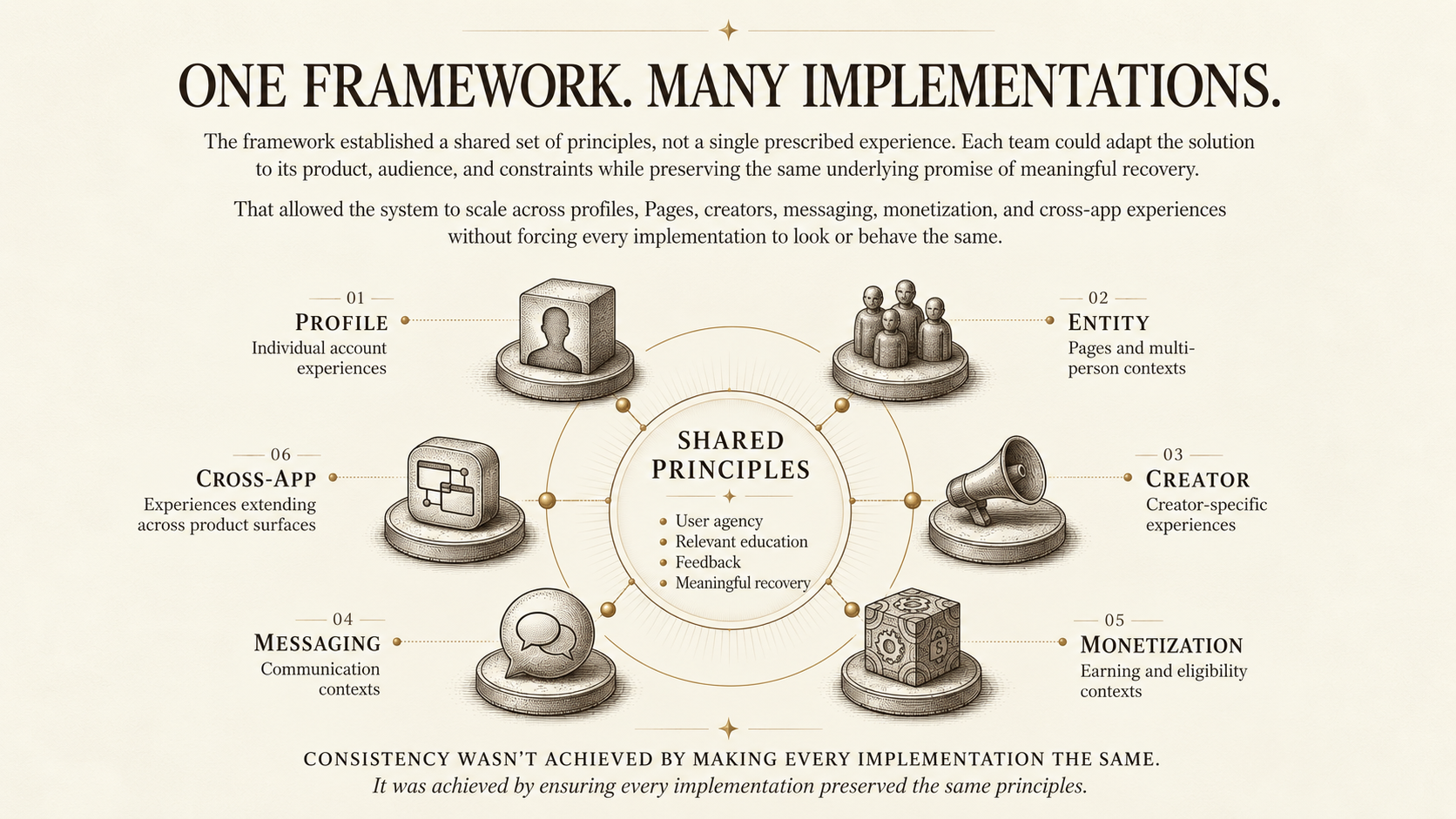
One Framework. Many Implementations
Across eight implementations, enforcement education needed to serve different account types, policy contexts, and recovery paths.
The experience requirements remained consistent. How teams implemented them could change.
sasa
Evidence in Practice
The Blueprint emerged from a pattern across education, music, product design, and AI: meaningful progress requires people to understand, participate, act, and adapt—not simply receive information or new technology.
The Blueprint in Action
Imagine a company automating customer support to reduce costs. The opportunity is significant, but so are the consequences for employees, service quality, and customer trust. How should leadership move forward?
Redesigning Customer Support Around AI
Understanding
Alignment
Action
Adaptation
The Future
Technology will continue to advance faster than people and organizations can comfortably adapt.
The real challenge isn't adopting more tools. It's helping people understand change, align around its meaning, and turn new possibilities into meaningful action.
That's where the Human Adaptation Blueprint becomes useful: treating technological change as a human challenge, not simply a technical one.
The organizations that lead the next era won't necessarily have the most advanced technology. They'll be the ones best able to turn possibility into human progress.


